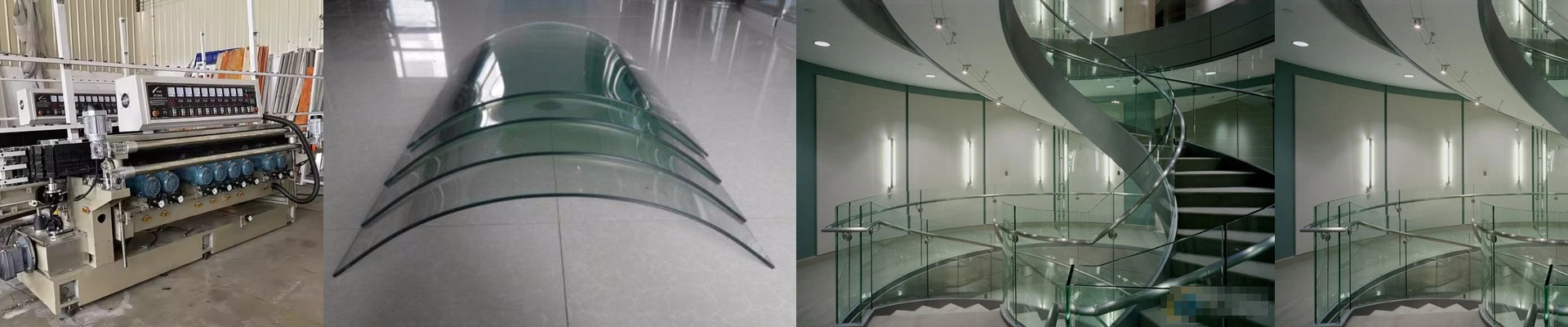
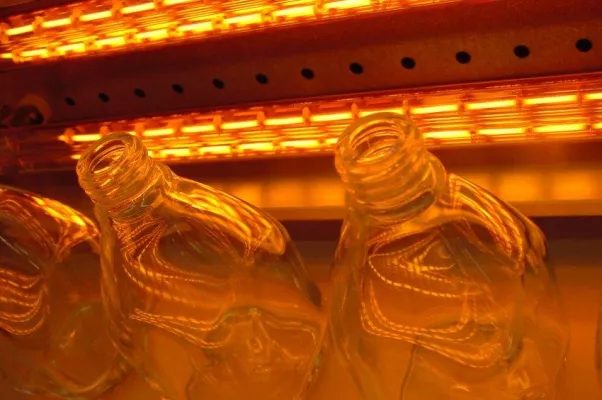
On the line, glass doesn’t care about your excuses. One cold spot during tempering, one lag in the bending cycle—you’ll see it immediately as scrap: stress cracks, optical distortion, flatness that just won’t hold. We built this infrared lamp reflector to make the heat profile do what the process needs, shift after shift. What’s actually happening under the hood The unit runs short-wave infrared quartz emitters paired with a high-emissivity reflector, so the energy hits the glass directly with very little convection. Power density lands at 15–45 kW/m² across a controlled zone, and the spectral output is kept tight to match how the glass absorbs. Response is fast—full output in seconds, not minutes. That keeps your furnace or bending station cycling at line speed, without waiting around for the ramp-up. The reflector geometry shapes the beam pattern so the temperature stays consistent across the width, not hotter on the edges and cool in the middle. Why it holds up in real production In tempering, uniform heating keeps thermal stress down and prevents edge cracking, so first-pass yield climbs. In bending, the quick response gives you repeatable sag control—better repeatability without slowing the oven. For EVA/SGP lamination and coating drying, the focused energy cures and dries without cooking the substrate, which cuts down on bubbles and haze. The module drops into existing heating stations as a direct replacement for OEM assemblies, so you can upgrade without re-engineering the whole line. You also use less energy because you spend less time heating and less time idling. Field notes—what to watch for Installation is straightforward, but the optics are sensitive. Keep the reflector clean, align the emitter to the focal line, and make sure the power supply matches the rated voltage and connector. You’ll feel a slight rise in ambient heat around the module—plan for airflow and shielding. Run the lamp within its specified duty cycle; if you keep it at full power continuously, you’ll shorten emitter life. Match the spectral output to your glass coating—wrong absorption wastes energy and can drive uneven heating. With a proper setup, we’re seeing stable output past 5,000+ hours and maintenance intervals you can plan around.