
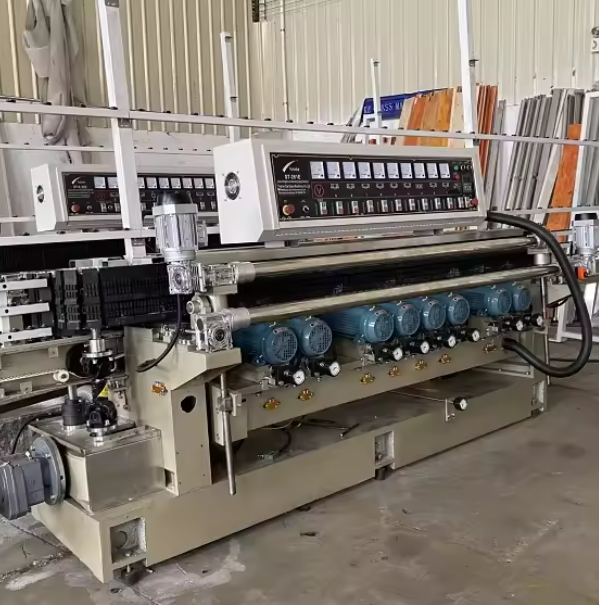
On the glass processing floor, the coating line doesn’t have time to wait around for drying. When the oven can’t deliver stable heat quickly, you feel it everywhere—missed takt, scrap from uneven cure, and maintenance windows that keep eating your production hours. A self-cleaning glass dryer isn’t just another heating box. It’s a thermal system built to keep the coating cure cycle moving—clean, repeatable, and under control. We built this unit around the way coating lines actually run: tight temperature tolerances, constant dust and binder residue, and the need to keep moving at line speed without stopping. The goal is straightforward—deliver heat where it’s needed, keep the radiant surfaces clean, and keep the process stable shift after shift.
What matters under the hood
The core is near-infrared (NIR) radiant heating. It puts energy straight onto the coated surface, with far less heating of the surrounding air. For glass coatings, that means a faster ramp to set, a shorter dwell, and a more consistent thermal profile across the width of the glass.
- **Wavelength and response:**The NIR output is tuned to match how common coatings absorb energy, so the surface hits cure temperature quickly without overheating the substrate. That gives you a shorter curing window that still meets adhesion and durability.
- **Power and density:**The heating modules are sized for the power density required by high-throughput lines. We match the array to line speed and glass size so the dryer supports the process, not fights it.
- **Self-cleaning design:**The system runs a controlled thermal self-clean cycle that pyrolyzes binder residues on the emitter surfaces. The residue flakes off and gets captured by integrated filtration, keeping emissivity stable and preventing the performance drift you get when lamps get coated up.
- **Uniformity control:**Zone control holds a stable thermal field across the glass. Uneven heating creates thermal stress; zone control reduces that risk and helps prevent micro-cracks and warp on sensitive coated glass.
- **Energy and footprint:**NIR is inherently efficient because it heats the target directly and minimizes convection losses. The compact profile fits into existing oven sections and can retrofit without tearing the whole line apart.
Why this approach holds up on real coating lines
Coating lines live on repeatability. When the dryer gets dirty, cure temperature drifts. When cure drifts, you either under-cure and risk adhesion failure, or over-cure and waste energy while risking degradation. The self-cleaning function attacks that drift head-on by keeping emitter emissivity consistent. In practice, you get three clear production advantages. **Faster cycle time.**NIR responds quickly, so you spend less time ramping to cure temperature and can shorten dwell. That translates into more parts per hour without stretching the oven. **Higher first-pass yield.**Zone control and stable emitter performance cut down hot and cold bands. Coating thickness uniformity and cure consistency improve, which lowers scrap from haze, poor adhesion, or uneven gloss. **Lower operating cost.**Direct radiant transfer wastes less energy heating air and structure. Add in the self-clean cycle, and you avoid the steady performance drop that comes with dirty emitters—so efficiency stays up without frequent shutdowns for cleaning. The dryer also helps you keep tighter process discipline. Zone data—temperature, power draw, and clean-cycle hours—feeds back into the line’s process window, making it easier to hold spec and run changeovers cleanly.
The practical details you need to plan for
A self-cleaning glass dryer integrates cleanly, but it comes with real-world constraints. Plan for them.
- **Installation alignment:**NIR is line-of-sight. The emitter array has to track the glass path to avoid shadows and keep coverage uniform. If the glass path varies, you’ll need adjustable mounting or extra zones.
- **Electrical and thermal management:**Industrial NIR modules need proper voltage and dedicated circuit protection. The housing and reflectors also require cooling airflow to keep components within limits, especially during longer self-clean cycles.
- **Self-clean cycle scheduling:**The self-clean function works, but it uses energy and generates particulate. Schedule it during micro-stops or low-load periods, and make sure your extraction and filtration are sized to handle the peak particulate load without plugging.
- **Compatibility with existing controls:**The dryer integrates with PLC and HMI systems, but the interface has to match your line’s control architecture. Set aside a short commissioning window to tune setpoints, alarms, and clean-cycle logic to your specific coating profile. If your coating line is wrestling with inconsistent cure, rising energy draw, and too much maintenance time, the question isn’t whether you need better heating. It’s whether you want heating that stays clean enough to run at design speed. A self-cleaning glass dryer gives you the thermal control to keep coated glass moving—at line speed, with stable quality, and fewer stops for cleaning.