




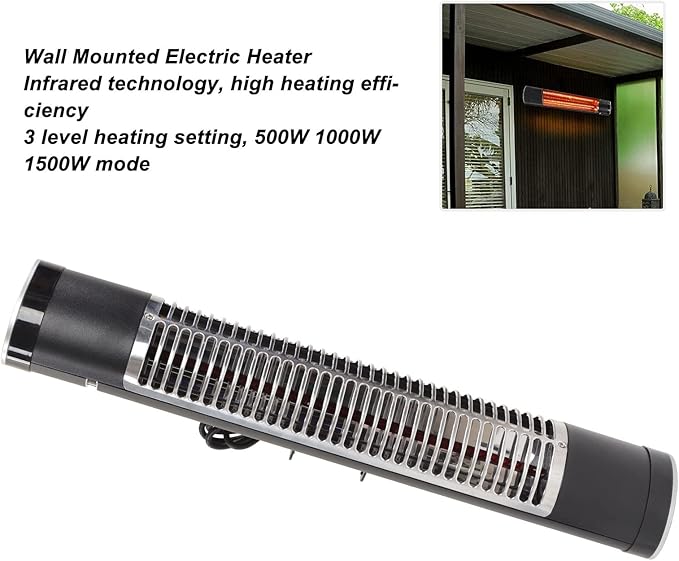
Out in a remote cabin, you know the routine: the kerosene smell that coats the walls, stings the eyes, and makes the air feel thick. The second the wind changes, the flame stutters and the room goes cold. We built this long-range patio heater to cut through that mess by ditching combustion and going straight to clean infrared warmth.
What actually matters under the hood
This electric patio heater runs on a carbon fiber infrared element, so it throws radiant heat directly onto people and surfaces, not the air around them. No drafts. No fumes. No open flame. The long-range output is made for wide patios and bigger rooms, and the built-in thermostat keeps the feel consistent. It plugs into a standard 120V outlet, and the sealed quartz-tube construction holds up when the nights get damp. For safety, tip-over protection kills power the instant the unit is knocked off-level.
Why this swap makes sense
Swap out a kerosene stove for an infrared heater and the indoor air quality shows it. No smoke. No soot. No chemical smell that clings to curtains and furniture. You also get warmth immediately—no warm-up lag, no refueling, and no middle-of-the-night refills. Radiant heat just feels more natural. Hands and feet stay comfortable even when the air is chilly, so you can read, cook, or sit together without shivering.
The details that keep you out of trouble
Infrared heats people and objects directly, so it’s strong in drafty spaces. But in a very tight, sealed room, it won’t raise the overall air temperature as fast as a convection heater. Place the unit so the beam hits the seating area, and keep a 3-foot clearance from combustibles. If you’re running it outdoors, pick a model rated for the conditions you face, and plug into a grounded outlet on a dedicated circuit.