



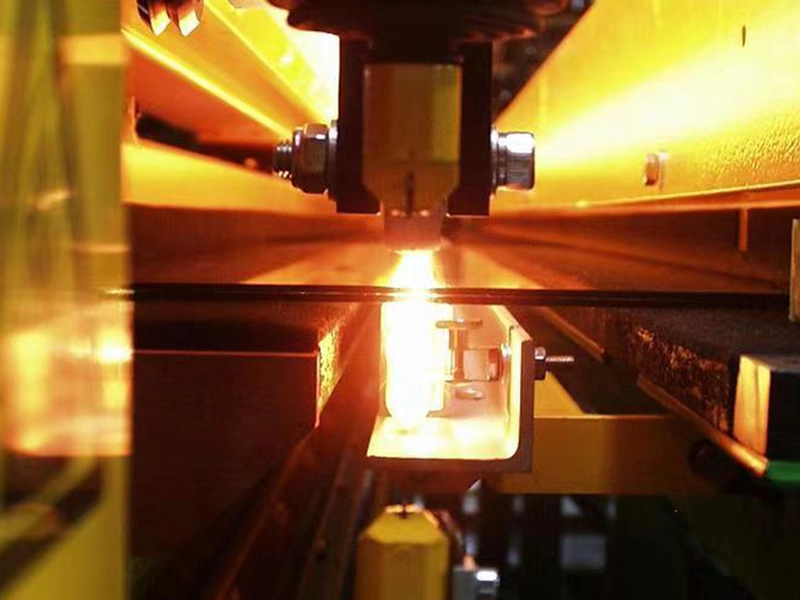
On the line, thermal stress cutting falls apart fast when the heat profile wanders. You start seeing micro-cracks along the score, edge chipping as the glass separates, and scrap climbing as the shift drags on. The heating module has to deliver stable, repeatable energy—every cycle—without pushing the glass past its fracture threshold. What matters, technically We build the heating around tight thermal stress control: quartz short-wave emitters with a narrow spectral output so you get rapid, surface-dominant heating, and reflector geometry that evens out the thermal field across the cutting zone. The payoff is a predictable temperature rise with minimal disturbance from convection, so the glass heats evenly and the score line behaves the same from piece to piece. The hardware is meant for industrial duty—high-temperature terminations, tough quartz envelopes, and standardized mounting that holds alignment even through thermal cycling. Power and voltage are matched to your machine layout, and the interface options let you integrate directly without rewiring the whole station. Why it holds up on the floor In glass processing, thermal stress cutting needs speed without overshoot. This module hits setpoint fast, holds it within tight tolerance, and recovers quickly between cycles—keeping high-throughput lines moving without adding dwell time. That shows up as fewer fractures, cleaner separation, and less rework. Energy use drops because the energy goes where it should: into the glass, not into heating the frame and everything around it. And when the heating is repeatable, the cutting parameters stop drifting shift after shift. What you need to know Compatibility is the first gate, so we handle it with drop-in retrofit kits built around common OEM footprints. Installation is straightforward, but you have to verify emitter alignment and clearance to the glass path—misalignment creates hot spots and kills the uniform profile. Run a short validation to lock in the temperature curve, then lock down the mounting. After that, maintenance is routine: keep the reflector clean, inspect the terminations, and replace the emitter on schedule before output drift starts to hit yield.