Getting Thermal Stability Right in Glass Annealing
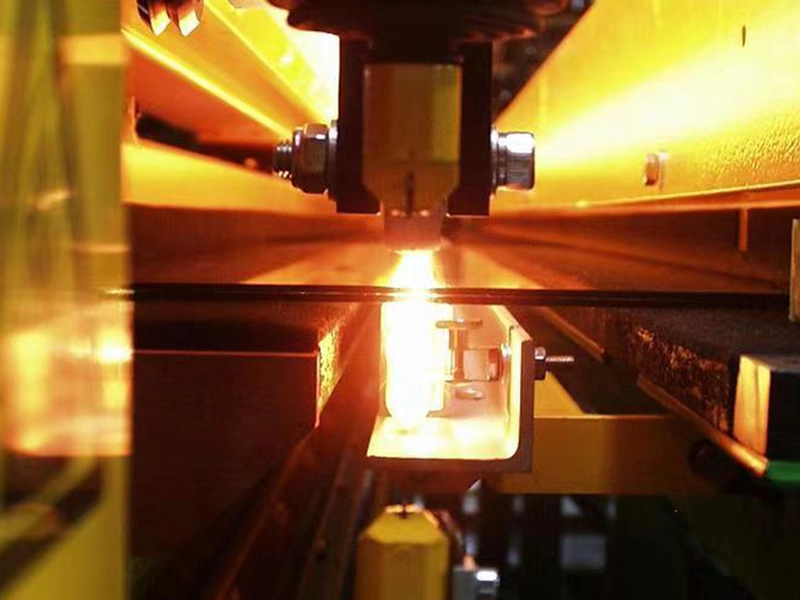
When you’re annealing lab glassware, you’re walking a razor’s edge. One wrong move with the cooling curve and you aren’t just looking at a crack—you’re looking at a piece of equipment that shatters into a million pieces because of internal stress. That’s why we stick with medium-wave infrared (MWIR) lamps. They just play better with silica and borosilicate. They hit the right absorption bands, whereas short-wave options often miss the mark.
Why we obsess over 0.1°C
You might wonder why we sweat the small stuff. Why push for 0.1°C accuracy? It all comes down to the glass transition temperature. If your heating element swings by even a couple of degrees, you end up with a thermal gradient across the vessel wall. It basically locks in stress. Then, the second that glass hits the workbench? Snap. Spontaneous crack. To stop that from happening, we pair those MWIR lamps with high-res PID controllers. The lamps react almost instantly when the voltage shifts. It lets us hold the soak temperature in a tiny, tight window so the whole molecular structure can relax together.
The a-ha moment with Medium-Wave physics
MWIR lamps give you the best of both worlds regarding penetration. They don’t just scorch the surface—which is a one-way ticket to thermal shock—but they get deep enough into the bulk material to heat it through. It’s a steady flow of heat. No “hot spots” like you get with those annoying resistive coils. But here’s the catch: keep an eye on your power density. If you cram too many watts into a small space, you’ll fry the ends of the lamp. Also, check your reflectors. If they’re dirty or pitted, you’re wasting energy and risking a burnout.
Making it work in the real world
If you want this to actually work, wire your lamps into an SCR drive. It’s the only way to modulate power without that annoying flicker you get from mechanical relays. One last thing. High-precision IR heating puts out a lot of waste heat. If your enclosure isn’t vented properly, the air inside will heat up and drift your setpoint right past that 0.1°C goal. Keep it breezy, and you’re golden.